
We should use criticism constructively instead of getting offended, says Faisal Kidwai
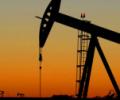
India has been looking at ways to switch from dollar as the US and EU have imposed sanctions on Iran's oil industry and financial institutions.

By thinking about growth versus poverty we have missed the main point, says MIT professor Abhijit Banerjee.

Since 2000, per capita GDP has grown faster in India's rural areas than in its urban centres. Rural incomes are growing, and consumers are buying discretionary goods and lifestyle products, including mobile phones, television sets and two-wheelers, says Sanjay Dawar, MD, Management Consulting, Accenture, India.
Since 2000, per capita GDP has grown faster in India's rural areas than in its urban centres. Rural incomes are growing, and consumers are buying discretionary goods and lifestyle products, including mobile phones, television sets and two-wheelers, says Sanjay Dawar, MD, Management Consulting, Accenture, India.

Unless the poor get richer, the domestic market is going to be considerably stalled, says Shikha Dalmia.
SC/STs have seen significant catch-up in education and incomes relative to non-SC/STs in recent years, says Pravin Krishna.
Rising cost of credit and infrastructure bottlenecks are hurting the export sector, says Rafeeque Ahmed, President, Federation of Indian Export Organisations.
Services cannot create enough jobs that will match the skill sets of the bulk of the work force, says Nirvikar Singh.

Growth is the only way poverty can be reduced, says JPMorgan Chase's Jahangir Aziz.

Rural markets can provide 25 per cent growth over the next decade, says CLSA's Aashish Agarwal.
Rural markets can provide 25 per cent growth over the next decade, says CLSA's Aashish Agarwal.
Foreign investors don't like policy uncertainty and reversibility, says Anusha Chari.
India will find it difficult to grow in a dynamic way because it has a high debt-to-GDP ratio, says Jim Rogers.
India can be a major politico-economic force, but it needs leadership that understands the power of billion-dollar investments and is not afraid to flex its muscle, says Faisal Kidwai.
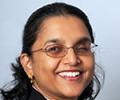
There are two major impact of a "transfer raj". First, criteria other than merit often determine the assignments of bureaucrats to specific positions. So the most important positions may not always go to the most qualified or competent bureaucrats. This naturally means that there are inefficiencies in policy formulation and implementation, Harvard Business School's Lakshmi Iyer tells Faisal Kidwai
I used to personally deliver beer to Indian restaurants in my car, says Lord Karan Billimoria.
I do not know if Modi is personally responsible for the killings and rapes of hundreds of Muslims -- that is for the courts to decide -- but I do know that being the chief minister he is at the very least morally responsible, says Faisal Kidwai
Discuss how high inflation and interest rates are impacting you with Senior Associate Editor (Business)Faisal Kidwai.
'The Haj subsidy is a trap used by politicians to curry Muslim votes,' says Abusaleh Shariff, member, Rajinder Sachar Committee.

He said the policy paralysis, which had gripped the country in recent months, was over, and India was back in business.
For returning to trend growth of over eight per cent GDP growth and sustained low inflation of four per cent, removal of supply-side constraints and investor-friendly policy reforms are key, says Rajesh Cheruvu, Chief Investment Officer, India, RBS.

High fiscal deficit and debt ratios remain one of the biggest constraints.
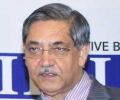
Change bank if unhappy with service, says RBI's Deputy Governor K C Chakrabarty.
Uttar Pradesh, unlike almost any other Indian state, is ruled and run on caste. There are more than 60 castes in the state and all compete with each other for political patronage and benefits. In some ways, caste is a bigger player in the state than either religion or national issues, says Faisal Kidwai.
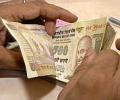
The rupee should be allowed to find its own level, says analyst Anil Bhansali.
Pepsico's Indra Nooyi claims she remains bullish on India, while Sebi's Sinha makes the case for using pension money to pump capital into the market, reports Faisal Kidwai.
Policies should help Muslims cross the school threshold, says Rakesh Basant, IIM-A professor and author of a study on Indian Muslims
Kochi leads the rest of India in crimes, Faisal Kidwai discovers, scrutinising the National Crime Research Bureau's records.
Raghuram Rajan receives rock-star welcome on his first day in office as Governor of Reserve Bank of India. But the question lingers: Can he sustain it?
Reserve Bank of India's move to cut cash reserve ratio has been welcomed by analysts.
India needs well-educated and competent politicians, says Abhishek Mishra, who resigned from his job as a professor at IIM-Ahmedabad to join the Samajwadi Party. Now appointed UP's minister of state for protocol, he tells Faisal Kidwai why he has great hopes for the future.
India needs well-educated and competent politicians, says Abhishek Mishra, who resigned from his job as a professor at IIM-Ahmedabad to join the Samajwadi Party. Now appointed UP's minister of state for protocol, he tells Faisal Kidwai why he has great hopes for the future.

It is the era of short messages, and in keeping with the times we kick off a new feature where our writers tell it like it is, in just a few words. Today, Faisal Kidwai lets off on middle class principles, rather the lack of them
.jpg)
India has been pursuing measures that discriminate against overseas businesses, says US Congressman Erik Paulsen.

'Pakistan's security establishment, despite its appallingly immoral approach to conflict, has worked with limited resources to maximise its national defence resources to continue bleeding India,' says Ajai Shukla.
.jpg)
The best way to put the economy back on track is to abolish income and corporate taxes, as this will not only raise confidence but also increase savings and boost growth, the Bharatiya Janata Party's Subramanian Swamy tells Faisal Kidwai.
.jpg)
The disparity between the outlook of the rich and poor was greater in India than in any other emerging economy. Indians might want to be worried about this because this suggests that the rich are really out of touch with the poor, Bruce Stoke, Director of Pew Research Center, tells Faisal Kidwai in an interview.
 © 2026 Rediff.com - Advertise with us - Disclaimer - Privacy Policy - Sitemap - Feedback - About us - Terms of use - Grievances